Dubai South Property Sales Hit New High as Smaller Apartments Gain Popularity
Residential transactions reached 12,428 in the first eight months of 2026, while studios and one-bedroom homes accounted for around 76% of sales
Dubai South’s residential property market recorded strong activity during the first eight months of 2026, with transaction volumes surpassing the total registered throughout the previous year. Buyers are increasingly choosing smaller apartments, while infrastructure development and an expanding project pipeline continue to shape the area’s property market.
According to a report by property consultancy Anarock, Dubai South recorded 12,428 residential transactions between January and August 2026, exceeding the 9,788 transactions registered during the whole of 2025. The latest figure represents an increase of approximately 27% over the previous year’s total.
The findings suggest that smaller, relatively affordable homes are becoming an important driver of residential demand in the district.
Residential Sales Value Reaches Dh15.9 Billion
Residential property transactions in Dubai South reached approximately Dh15.9 billion in value during the first eight months of 2026, equivalent to around 81% of the Dh19.6 billion recorded in 2025.
The area has experienced substantial growth over recent years. Annual residential sales value increased from Dh720 million in 2020 to Dh19.6 billion in 2025, representing roughly 27 times growth over the period.
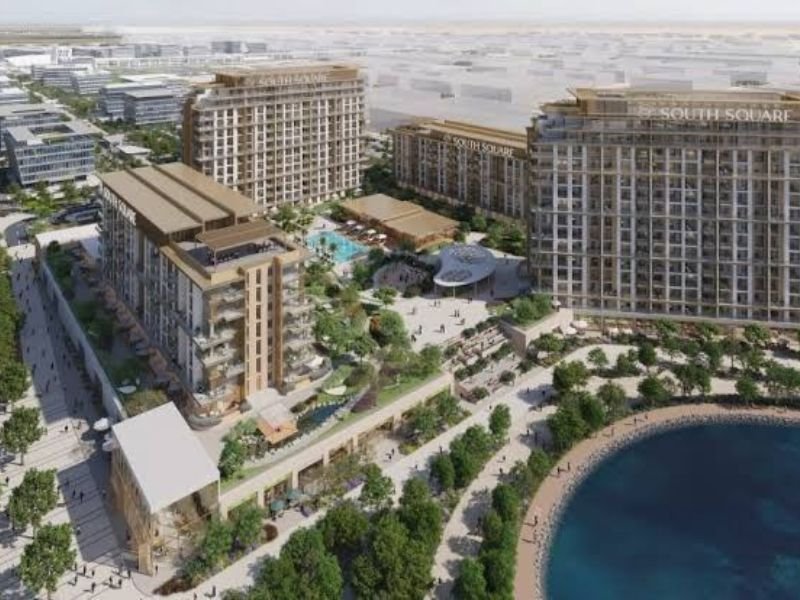
Dubai South is a master-planned development covering approximately 145 square kilometres in southern Dubai. Its six districts serve residential, logistics, aviation, exhibition, gold and business activities, with Al Maktoum International Airport playing a central role in its long-term development plans.
Studios and One-Bedroom Apartments Lead Demand
Smaller residential units accounted for the largest share of transactions between January and August 2026.
Studios represented approximately 45% of residential sales, more than double their 19.5% share in 2025. One-bedroom apartments contributed a further 31%, bringing the combined share of these two property types to around 76%.
Apartments overall accounted for approximately 94.5% of residential transactions during the period, compared with 31% in 2020.
The changing mix of properties being purchased has also influenced average transaction values. The average residential price reached Dh1,656 per square foot during the first eight months of 2026, compared with Dh650 per square foot in 2020.
Meanwhile, the average transaction value declined to approximately Dh1.28 million from its peak of Dh2.57 million in 2023.
Anarock attributed the lower average purchase value primarily to the growing share of smaller homes rather than a general decline in property prices. A smaller apartment can have a lower total price even when its cost per square foot is higher.
Off-Plan Properties Dominate Transactions
Off-plan homes continued to account for most residential transactions in Dubai South. According to the report, they represented approximately 94% of transaction volume between January and August 2026, up from 73% in 2020.
This indicates that buyers continue to play a significant role in the area's development pipeline, purchasing properties before construction is completed.
However, the consultancy noted that the ready-property and resale segments have yet to reach the same level of maturity as the off-plan market.
For investors, this makes it important to consider construction schedules, developer track records and future competition when assessing individual projects.
Airport Expansion and Infrastructure Support Growth
Dubai South’s long-term development plans are closely linked to infrastructure investment, particularly the expansion of Al Maktoum International Airport.
The airport expansion, approved in April 2024 with an announced investment of Dh128 billion, is planned to accommodate up to 260 million passengers and 12 million tonnes of cargo annually. The first operational phase is targeted for 2032.
The wider master plan is designed to accommodate approximately one million residents and 500,000 jobs when fully developed.
These long-term ambitions could support demand for residential properties as employment opportunities, transport connections and commercial activity expand. However, the pace of future housing demand will depend on how development and infrastructure progress over time.
Rental Market and Land Purchases Show Further Activity
Dubai South’s rental market has also expanded. Anarock reported that average annual rent rose from Dh34,534 in 2020 to approximately Dh82,063 during January–August 2026. Rental transaction volumes increased to around four times their 2020 level.
Commercial property and land transactions have also grown. The value of commercial transactions increased from Dh60 million in 2020 to Dh5.46 billion in 2025, with land accounting for approximately 97% of the 2025 total.
Developers purchased an additional Dh2 billion worth of land during the first eight months of 2026, indicating continued investment in future development opportunities.
More Than 38,000 Homes Scheduled for Delivery by 2029
Dubai South is preparing for a substantial increase in residential supply. Anarock identified 38,116 units scheduled for delivery between 2027 and 2029, compared with 10,813 units delivered between 2016 and 2026 to date.
Annual handovers are expected to peak at 16,094 units in 2028.
The projected supply could create additional choices for buyers, but it also raises questions about the market’s ability to absorb new homes at the planned pace. Sustained demand will be important as developers bring more properties to completion.
Based on the sales-value pace recorded during January–August 2026, the report projected that annual residential sales value could reach approximately Dh23.9 billion by the end of the year if the trend continues.
Dubai South’s property market has therefore entered a period of strong transaction activity, supported by demand for smaller homes, off-plan purchases and long-term infrastructure plans. As more units approach delivery, the balance between new supply and buyer demand will be an important factor shaping the district’s next stage of growth.
END.