Expo City Dubai Puts AI and Urban Data to the Test in Smart-City Operations
Dubai’s urban development is exploring how AI, connected infrastructure and data can move beyond technology pilots to improve the way a city operates
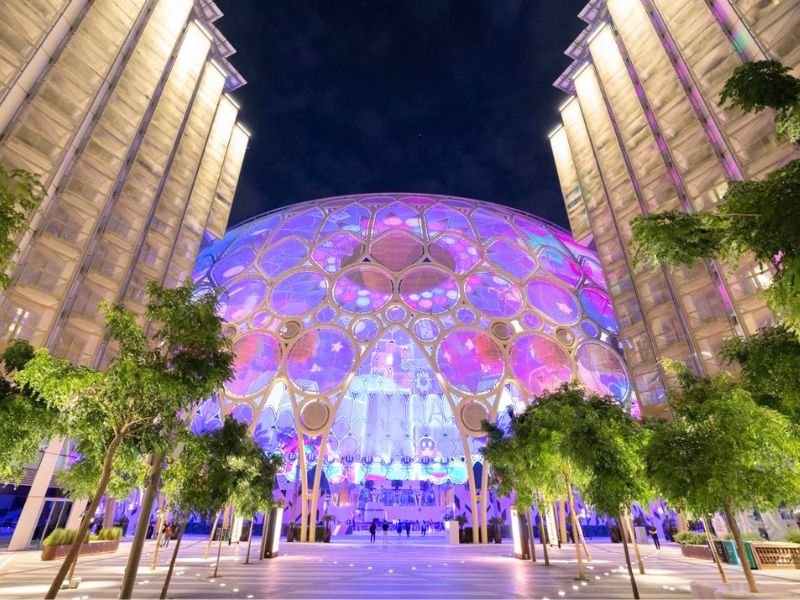
Expo City Dubai is taking a more practical approach to smart-city technology, focusing not only on deploying digital systems but also on how the information they generate can be used to improve urban operations.
The development has built digital infrastructure that includes sensors, cameras and Internet of Things (IoT) devices. These systems generate information that can help teams understand areas such as mobility, energy consumption, environmental conditions, security and building performance.
As Expo City begins exploring artificial intelligence, the focus is increasingly shifting from simply adopting new technology to determining where it can deliver measurable value.
Moving beyond the traditional smart-city model
For years, smart-city projects have often focused on deploying connected technologies across urban environments.
Expo City Dubai is approaching the next stage from a different starting point: identifying an urban challenge first and then determining whether technology can provide a useful solution.
This means combining data, infrastructure, governance and human decision-making rather than treating technology as an objective on its own.
The approach recognises that having large volumes of information does not automatically make a city smarter. Data quality, institutional processes, accountability and the ability to act on information are equally important.
Data forms part of the city's operating system
Expo City views data, infrastructure and governance as interconnected elements.
Digital systems collect information about how the city is performing, while infrastructure generates additional data through its day-to-day operation. Governance determines how that information can be collected, connected and used.
Trust is another important consideration. Residents and users need confidence that information is handled appropriately, while organisations need reliable data and decision-makers need to understand both the strengths and limitations of the information available to them.
Expo City Dubai's Urban Framework is designed to support this approach. It uses 131 metrics from different sources to examine the performance of the urban environment across environmental, social and urban dimensions.
Real-world testing is different from technology demonstrations
One of the challenges facing smart-city projects is moving successful experiments into everyday operations.
A technology may work effectively in a controlled pilot but encounter different challenges when introduced into a functioning urban environment.
Issues such as maintenance, regulation, procurement, operating costs, user behaviour and unexpected consequences can all influence whether an innovation remains useful over the long term.
For this reason, Expo City views its urban environment as a place where technologies can be tested under real-world conditions.
The objective is not simply to demonstrate that a particular technology works, but to understand where it creates measurable improvements and what conditions are necessary for successful implementation.
Connected infrastructure supports Expo City's urban goals
Expo City Dubai was planned around principles including connectivity, sustainability, accessibility and the concept of a 15-minute city.
Its digital infrastructure supports these objectives by collecting information from different parts of the development.
Sensors, cameras and IoT systems can provide data related to movement, energy and water consumption, security, environmental conditions and other aspects of city operations.
This continuous flow of information can help teams monitor the urban environment and understand how different systems are performing.
The emphasis, however, remains on using technology to support the wider goals of the city rather than deploying technology simply for its own sake.
Expo City takes a measured approach to AI
Artificial intelligence is still at an early stage of adoption across Expo City's operations.
Initial experiments are being used to determine where AI can improve efficiency, quality and decision-making, as well as where conventional approaches may remain more practical.
Some applications may save significant amounts of time, while others may add complexity without delivering enough additional value.
This experimentation is helping teams develop practical experience with AI while considering issues such as data quality, governance, cybersecurity, human oversight and responsible use.
An important part of that process is understanding when AI may not be the appropriate solution.
AI readiness goes beyond having the technology
Expo City's experience highlights a distinction between being capable of using AI and being ready to deploy it effectively.
An AI model may be able to perform a particular task, but successful implementation can depend on whether the necessary data, permissions, cybersecurity measures, governance structures and skills are already in place.
This becomes even more important when AI moves from internal organisational processes into systems that influence the operation of a live urban environment.
For Expo City, early experimentation provides an opportunity to identify these challenges before AI becomes more deeply embedded in city operations.
Sharing smart-city lessons
Expo City Dubai is also using its position as an urban development and innovation hub to exchange ideas with other cities.
The aim is to compare practical experiences, including technologies that have delivered results as well as approaches that have not produced the expected benefits.
This collaborative approach could become increasingly important as governments and cities explore AI-powered services and more advanced forms of digital urban management.
Rather than measuring progress simply by the number of AI systems deployed, the focus is increasingly moving toward the outcomes those systems produce.
The next phase of smart-city development
Expo City's approach points toward a broader evolution in smart-city thinking.
The emphasis is moving from connected devices and technology demonstrations toward urban intelligence — using data, digital infrastructure, AI and human judgement together to address real challenges.
For Expo City Dubai, the coming phase will involve determining where AI can genuinely improve urban performance while ensuring that technology remains supported by appropriate governance, expertise and human oversight.
The result could provide useful lessons for other cities looking to introduce AI and connected technologies into everyday urban operations.
END.