Dubai RTA Unveils AI Expansion Plan Targeting AED300 Million in Annual Value
New strategy aims to integrate agentic artificial intelligence into half of the authority's operations while improving traffic management, road safety and government services
Dubai is accelerating the adoption of artificial intelligence across its transport network as the Roads and Transport Authority (RTA) introduces an expanded strategy designed to generate more than AED300 million in additional annual value.
The programme will focus on integrating advanced AI systems into 50% of the authority's operations and services over the next two and a half years. The initiative is intended to move beyond conventional automation by introducing intelligent systems capable of analysing information, anticipating operational requirements and supporting decisions with minimal human intervention.
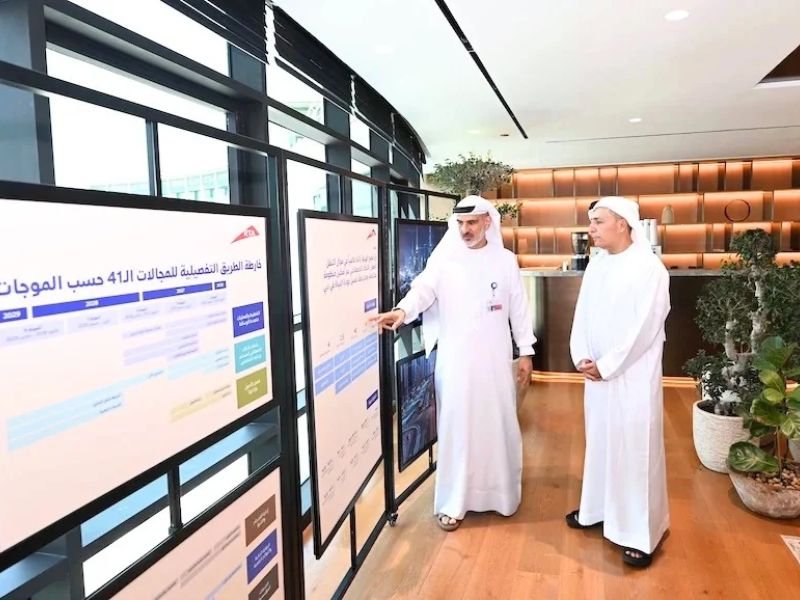
The updated strategy covers 41 business areas within the RTA, with the initial implementation stages concentrating on 11 areas. These first phases include the development of 40 AI products and four supporting infrastructure projects. According to the authority, 11 of the planned AI products have already been completed.
AI strategy targets lower congestion and improved road safety
Improving Dubai's transport efficiency is one of the central objectives of the programme.
The RTA expects the expanded use of artificial intelligence to contribute to a 3–5% reduction in traffic congestion. It also aims to lower accident rates involving newly licensed motorists by between 10% and 20%.
Additional performance targets include reducing the time required to resolve complaints and process cases by 20–30%.
The authority also plans to improve customer service efficiency by cutting waiting periods at customer happiness centres by 14–16% and reducing service delivery times by 15–20%.
Other expected benefits include shortening procurement processes by 10–15% and saving between 10% and 15% of working hours currently spent on operational and engineering activities.
RTA Director General and Chairman Mattar Al Tayer said the initiative represents a further stage in the authority's digital transformation, with AI moving towards more advanced responsibilities in analysis, forecasting, decision support and service delivery.
Vehicle licensing and digital services receive AI upgrades
Several of the initial AI applications are focused on making government transactions faster and easier for residents and businesses.
The RTA has identified more than 180 potential applications and early implementation opportunities across the first 11 business areas.
Of the 11 AI products already completed, five relate to planning and business development, another five focus on vehicle licensing, and one supports right-of-way services.
One of the major upgrades involves Mahboub, the authority's existing digital assistant. Its enhanced capabilities are designed to help customers complete transactions through the RTA's mobile application, website and WhatsApp channel.
The upgraded service supports five vehicle licensing transactions and provides access to approximately 100 informational services.
Integration with UAE PASS and Dubai Pay is intended to make certain vehicle-related transactions possible in less than five minutes, according to the authority.
Automated document checks to accelerate approvals
Artificial intelligence is also being introduced into engineering approvals and regulatory documentation.
An upgraded electronic no-objection certificate system will assist applicants with submission requirements, examine supporting documents and provide technical insights to officials assessing construction and engineering activities near RTA infrastructure.
The service currently processes approximately 130,000 certificates annually. Its new AI capabilities are expected to make document reviews up to three times faster.
Another initiative uses machine learning and optical character recognition to examine licensing documents, identify irregularities and suggest corrections.
The authority expects this system to accelerate auditing processes by up to 21 times, cover all documents within its designated scope and eliminate more than 25,000 hours of manual work annually.
AI agents to improve Dubai's public transport planning
Public transport operations are another major focus of the strategy.
The RTA is developing an AI-supported bus network planning system that uses approximately 20 specialised AI agents to examine service performance, identify gaps and evaluate possible network improvements.
These systems will analyse operational information, simulate alternative routes and recommend adjustments to improve service efficiency.
The initiative aims to make network assessments five times faster while reducing the time needed to introduce service modifications from approximately 60 days to 48 days.
The authority also expects the technology to improve bus punctuality by as much as 10%.
AI monitoring extends to procurement and internal operations
Beyond transport planning and customer services, the RTA is applying intelligent technology to its procurement and contract management processes.
A separate AI system will examine outsourcing agreements on a monthly basis before payments are authorised. It will assess employee attendance, completed work and compliance with contractual obligations.
The authority is also expanding the use of workplace AI tools to improve employee productivity.
According to Ahmed Hashem Bahrozyan, CEO of RTA's Corporate Technology Support Services Sector, active usage of Microsoft Copilot among its users at the authority has exceeded 90%, contributing to an estimated 10% saving in working time.
The RTA has additionally developed eight strategic technology initiatives in collaboration with industry partners, including Huawei, Boston Consulting Group and Microsoft.
Dubai strengthens its position in AI-powered government services
The updated strategy reflects Dubai's broader efforts to incorporate artificial intelligence into public infrastructure and government operations.
By introducing AI into transport planning, vehicle licensing, engineering approvals and administrative processes, the RTA aims to improve service efficiency while reducing operational workloads.
The planned transition towards agentic AI also represents a move towards systems that can handle more complex tasks rather than simply responding to individual requests.
With implementation scheduled over the next two and a half years, the programme is expected to play an important role in the continued digital development of Dubai's transport services.
END.