UAE Real Estate Market Shows Strength as Office and Logistics Demand Remains High
CBRE's Q3 2026 review highlights rising office rents, strong retail occupancy and diverging residential trends across Dubai and Abu Dhabi
The UAE property sector continued to demonstrate resilience during the third quarter of 2026, with strong demand for commercial space and industrial facilities helping sustain market activity despite regional uncertainty and changing economic conditions.
According to the latest UAE Real Estate Market Review from global property consultancy CBRE, the country's diversified economy, business-friendly environment and continued appeal to international investors have supported real estate performance across several major sectors.
Office and industrial properties remained among the strongest performers, while residential markets showed different patterns across Dubai and Abu Dhabi. Retail destinations also maintained high occupancy levels, although hospitality continued to face challenges linked to changes in international travel demand.
UAE's non-oil economy supports property market activity
The country's non-oil sectors continued to play a central role in economic growth, accounting for 79% of the UAE economy during the third quarter.
Business conditions also remained positive. The UAE Purchasing Managers' Index (PMI) reached 55.3 in both August and September, its highest level in 20 months. A reading above 50 indicates expansion in private-sector business activity.
The continued growth of financial services, technology, trade and other non-oil industries has helped attract companies and skilled professionals to the country. This has supported demand for commercial property, particularly in established business districts and emerging employment centres.
Dubai and Abu Dhabi office markets record rental growth
Commercial offices continued to outperform other property segments, with limited availability of premium workspace contributing to higher rents in both major business centres.
In Dubai, average office rental rates increased by 12% compared with the same period in 2025. Occupancy reached approximately 95%, reflecting strong competition for available Grade A office space.
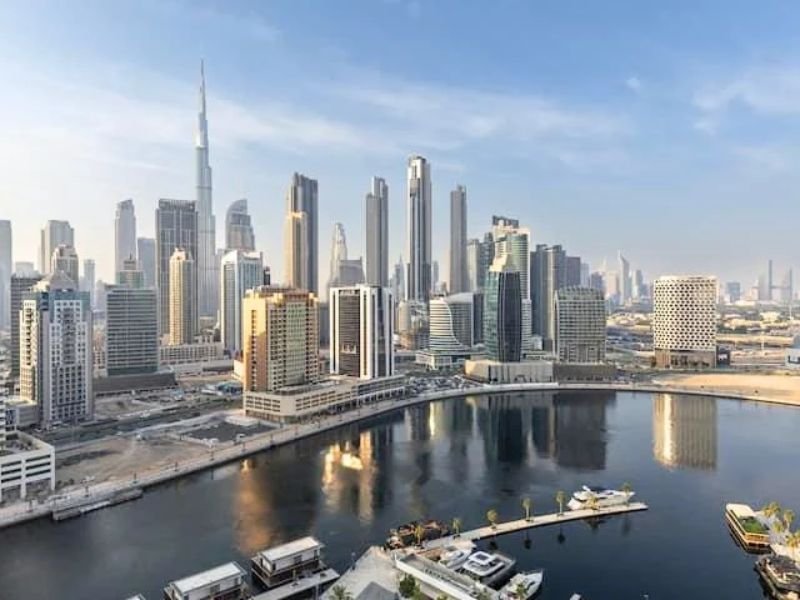
Business districts such as DIFC, Business Bay and Dubai Internet City continued to attract companies looking for modern offices. Financial institutions, professional services firms and technology businesses were among the key sources of demand.
Abu Dhabi recorded an even stronger increase in office rents, with average rates rising 20% year-on-year. Occupancy levels reached approximately 96%.
The expansion of financial institutions, multinational companies and businesses operating within Abu Dhabi Global Market (ADGM) contributed to demand for high-quality commercial premises. The figures reinforce the capital's growing importance as a regional destination for businesses and investors.
Dubai residential sector moves towards a more measured pace
Dubai's housing market showed signs of stabilisation during Q3 2026 after several years of substantial growth.
Average residential sales prices edged down by approximately 1% year-on-year, while rental rates recorded a larger decline of around 7%. Transaction activity also moderated as some buyers became more cautious and developers adjusted the pace of new project launches to changing market conditions.
Despite these developments, residential values remain considerably higher than pre-pandemic levels. The latest figures suggest that the market is entering a more balanced period rather than reversing the significant gains recorded over the previous growth cycle.
Abu Dhabi residential market continues to expand
Abu Dhabi maintained positive momentum in its residential sector, supported by demand from both investors and people purchasing homes for their own use.
Apartment prices increased by 13% year-on-year during the third quarter, while residential transaction volumes grew by approximately 5% compared with the corresponding period in 2025.
New master-planned communities and developing residential destinations continued to attract interest, reflecting the capital's ongoing expansion and its appeal to a broader range of property buyers.
The contrast between Dubai's more measured residential performance and Abu Dhabi's continued price growth highlights the different stages and conditions of the two emirates' housing markets.
Retail properties maintain high occupancy
The UAE retail sector demonstrated stability despite softer conditions in parts of the hospitality industry.
Occupancy across retail properties reached approximately 97% in Dubai and 96% in Abu Dhabi, indicating continued demand for well-positioned shopping and lifestyle destinations.
Average retail rents in Dubai rose by 5% year-on-year, while Abu Dhabi recorded a more modest increase of 1%.
Prime shopping centres benefited from domestic consumer spending and continued investment in retail destinations that combine shopping with dining, entertainment and other visitor experiences. Limited availability of attractive retail space also supported rental performance.
Hospitality industry faces pressure amid changing travel conditions
The hospitality sector experienced a more difficult operating environment during 2026 as geopolitical uncertainty affected travel patterns across some international markets.
CBRE reported that the UAE's hotel occupancy performance remained below the previous year's level. The year-to-date decline was approximately 24 percentage points, compared with a 28-percentage-point decline recorded during the first half of the year.
Average Daily Rate (ADR) fell by 8% year-on-year, while Revenue per Available Room (RevPAR) decreased by 30%.
Dubai nevertheless welcomed almost seven million international overnight visitors during the first eight months of 2026. Monthly arrivals had been improving since March, providing some support for the tourism and hotel sectors ahead of the peak travel season.
Industrial and logistics properties benefit from limited supply
Industrial and logistics real estate continued to attract strong occupier interest, supported by businesses expanding their distribution networks and strengthening regional supply chains.
Dubai recorded a 12% annual increase in average industrial rents during the third quarter, while Abu Dhabi registered growth of 6%.
Demand came from e-commerce companies, third-party logistics operators and businesses seeking modern warehouse and distribution facilities. The limited availability of suitable properties has increased competition among occupiers looking for strategically located space.
Investor interest in logistics assets also remained firm, supported by the sector's role in trade, distribution and the UAE's wider economic development.
UAE property market retains long-term appeal
Commenting on the market's performance, Matthew Green, Head of Research at CBRE MENA, said that although 2026 had brought a more challenging operating environment than initially expected, the UAE continued to benefit from solid underlying market conditions.
He highlighted the strength of office demand, continued activity in industrial and logistics properties, and sustained residential growth in Abu Dhabi. He also noted that tourism-linked sectors had experienced greater pressure during the year.
Overall, CBRE's Q3 review points to a UAE real estate market with differing trends across its major segments. Commercial offices, retail and logistics assets have benefited from strong occupier demand and limited supply, while residential conditions have become more varied between emirates.
The country's diversified economy, international business connections and ability to attract investment continue to provide important support for its property sector as it moves towards the final quarter of 2026.
END.