Sharjah opens first phase of major road connectivity project linking Dubai
New bridges and junction improvements aim to ease traffic movement and strengthen connections between key areas of Sharjah and Dubai
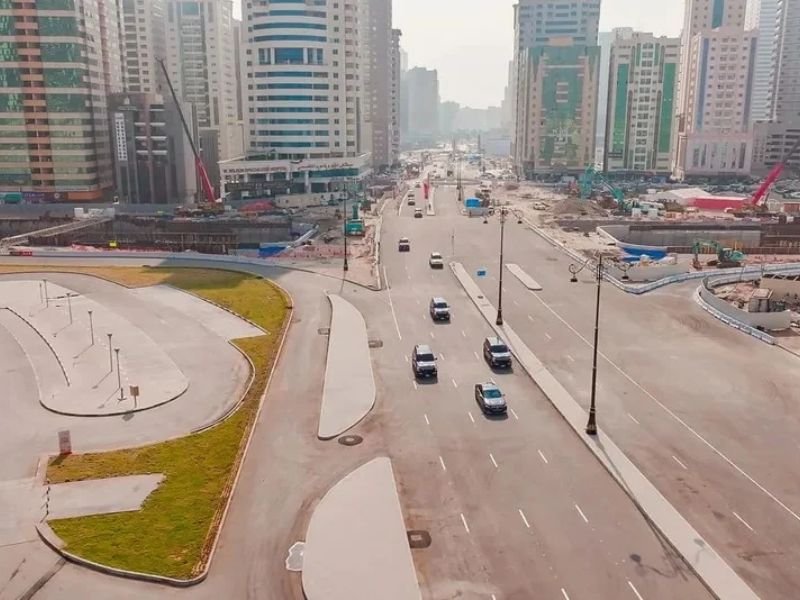
Sharjah has brought the first phase of a major road infrastructure project into operation, marking progress in efforts to improve traffic movement between the emirate and Dubai.
The initial stage includes the partial opening of Al Taawun Interchange, along with several bridges and road junctions. The changes are designed to improve access from Sheikh Mohammed bin Zayed Road towards Expo Centre Sharjah, particularly during the Sharjah International Book Fair.
The wider project is being implemented to increase road capacity, reduce congestion and improve connections between important residential, commercial and industrial areas.
Five sections planned to improve Sharjah's road network
The overall programme covers five main infrastructure sections, each targeting traffic pressure on important routes across the emirate.
One of the major components involves improvements along Al Taawun Street. The plans include a 560-metre tunnel with three lanes in each direction, alongside a roundabout and a signal-controlled junction. Once fully operational, this section is designed to accommodate approximately 4,200 vehicles per hour during peak periods and improve access to Expo Centre Sharjah and nearby districts.
Another major component focuses on Al Khulafa Al Rashideen Interchange along Al Ittihad Road. The planned improvements include two underpasses and a 315-metre bridge connecting the interchange with Jamal Abdul Nasser Street. These changes are expected to provide capacity for around 2,600 vehicles per hour and strengthen connections to Al Khan Street and the Ring Road.
Industrial road improvements to increase traffic capacity
The project also includes upgrades to two junctions connecting First and Second Industrial Streets. The works feature two bridges with a combined length of approximately 866 metres, together with a signal-controlled intersection and dedicated turning lanes.
These improvements are intended to establish more direct road connections between Damascus Street in Dubai and Wasit Street in Sharjah. The section is designed to handle approximately 2,800 vehicles per hour during peak traffic periods.
Further upgrades are planned along Third Industrial Street, where a 2.7-kilometre road connection will include two bridges and an underpass. The infrastructure will link the Ring Road, Al Khan Street and Al Khulafa Al Rashideen Interchange, with an expected capacity of approximately 5,200 vehicles per hour.
The final section involves expanding the turning route from Sheikh Mohammed bin Zayed Road towards the Ring Road. Road widening and additional lanes are also planned to improve traffic movement towards Sharjah city centre and Sheikh Mohammed bin Zayed Road.
Second phase to complete major road connections
While the first phase has entered operation, additional construction and road improvements remain part of the programme.
The next stage will include the full opening of the upper-level junction at Al Taawun Roundabout and the Al Taawun Tunnel. It will also cover the completion of bridges and junctions along three industrial streets, as well as further improvements to Al Khulafa Al Rashideen Interchange and its connection to Jamal Abdul Nasser Street.
The completed network is expected to provide more efficient movement between major roads and surrounding neighbourhoods.
Infrastructure investment supports Sharjah's urban development
The road improvement programme reflects Sharjah's continued efforts to strengthen its transport infrastructure in response to growing traffic requirements.
Better connections between Dubai and Sharjah can support daily commuting, improve access to commercial destinations and make travel between residential communities more convenient.
For the property sector, improved accessibility is an important factor in the development of residential and commercial districts. As the remaining project sections are completed, the upgraded network is expected to contribute to the emirate's wider urban development and transport objectives.
END.